
Articles & blog
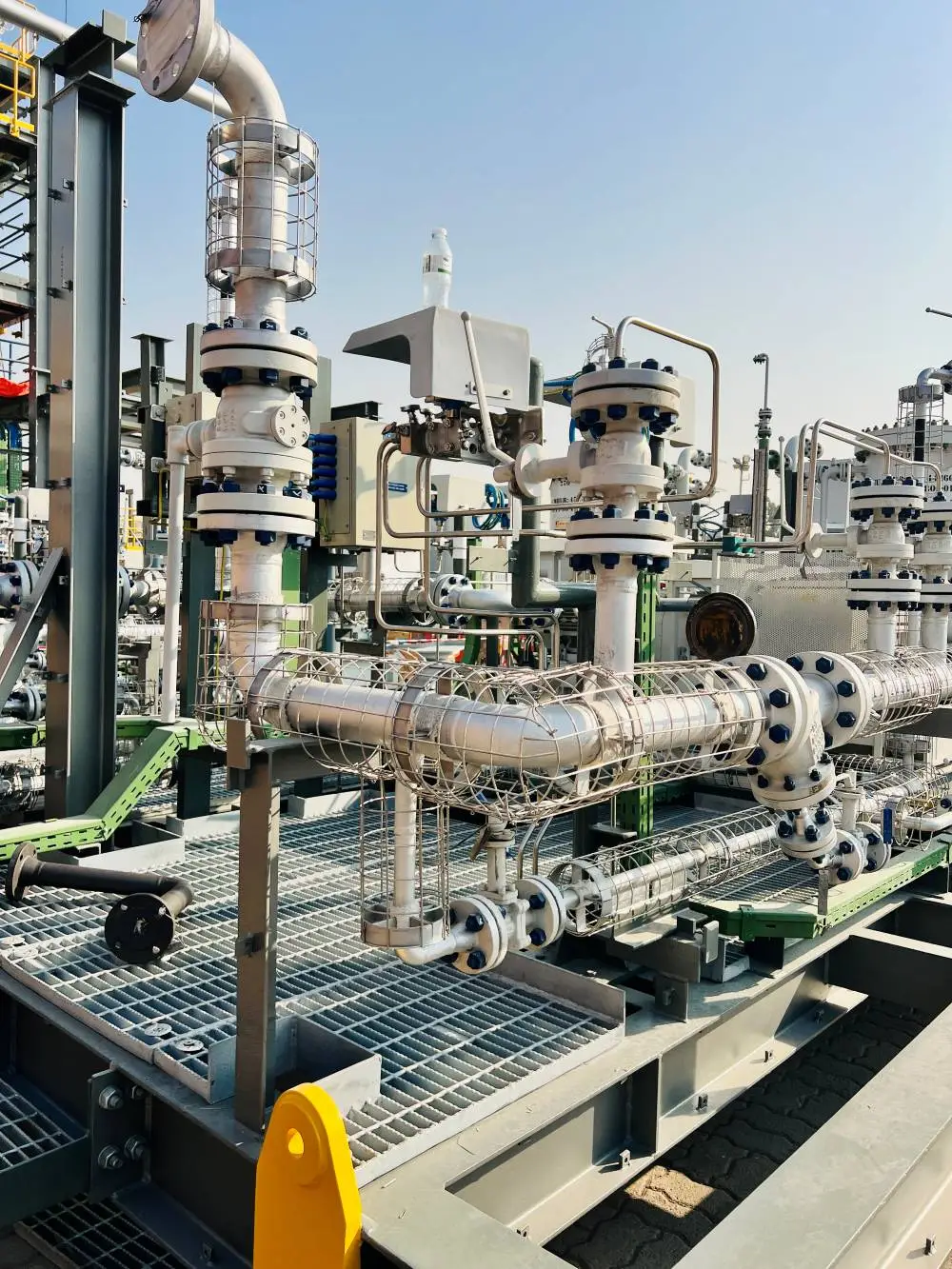
Personnel Protection Insulation: Preventing Burn Hazards on UAE Industrial Sites
What is personnel protection insulation?
Personnel protection insulation (PPI) is a safety-focused insulation system applied to hot process equipment, piping, and exhaust systems to bring exposed surface temperatures down to a safe touch limit, preventing burn injuries to workers who may accidentally contact them during normal site activity. It is typically installed as fixed cladded insulation or removable mesh guards, targeting a maximum touch temperature around 60°C (140°F) in line with OSHA and ISO 45001-aligned site safety standards.
Introduction: The Hazard Standing Next to the Pipeline
A process pipe running at 300°C doesn't need to fail to hurt someone — it just needs to be within arm's reach of a technician walking a routine inspection round. Personnel protection insulation exists precisely for that gap between "the equipment is working as designed" and "the equipment is safe to be near." At Novoclad Insulation Contracting LLC, PPI is treated as a distinct safety scope, not an afterthought bolted onto thermal insulation packages.
Why Touch-Temperature Safety Is a Real UAE Site Issue
UAE refineries, petrochemical plants, power stations, and marine engine rooms run hot process equipment in close proximity to walkways, maintenance platforms, and inspection routes. Combine ambient ground-level temperatures that regularly exceed 45°C in summer with process surfaces running into the hundreds of degrees, and the margin for a careless five-second contact injury narrows fast. Burn injuries from unguarded hot surfaces remain one of the most preventable — and most cited — incident categories in industrial HSE audits.
What Touch-Temperature Limit Are We Actually Targeting?
Most industrial safety frameworks converge on a similar number: keep accessible surface temperatures at or below roughly 60°C (140°F) for continuous contact exposure. OSHA guidance, ISO 45001-aligned site policies, and most EPC client HSE specifications use this figure — or a stricter one — as the design target for any surface a worker could reasonably touch during normal operations or maintenance. The exact limit on a given project depends on:
-
✓
Expected contact duration
A surface someone might brush against briefly tolerates a higher limit than one requiring sustained hand contact during maintenance. -
✓
Client-specific HSE specifications
Many UAE EPC contractors and operators (ADNOC group companies among them) set their own touch-temperature limits, sometimes stricter than the general OSHA benchmark. -
✓
Location relative to walkways and platforms
Surfaces directly adjacent to a designated walking or working area are held to a tighter standard than equipment in a restricted, rarely-accessed zone.
Two Approaches: Fixed Insulation vs. Removable Mesh Guards
Traditional Fixed PPI
A permanent insulation layer — typically mineral wool or a similar low-conductivity material — applied directly over the hot surface and protected with a cladding jacket. Best suited to equipment that isn't opened for inspection often, where a permanent solution is more practical than repeated removal.
Removable Mesh Guards / Safety Cages
A perforated metal mesh or cage installed with a standoff gap from the hot surface, allowing airflow to cool the guard's outer surface to a safe touch temperature while leaving the underlying equipment fully accessible for inspection, valve operation, or maintenance without removing insulation.
The right choice depends on how often the equipment needs to be accessed — frequently-serviced valves, flanges, and instrumentation connections generally favor mesh guards; long, continuously-running pipe runs and vessels favor fixed insulation.
Where Personnel Protection Insulation Is Applied
-
✓
Exposed hot piping and exhaust manifolds
In refineries, process plants, and power generation facilities. -
✓
Steam lines and steam traps
Along maintenance walkways and platforms. -
✓
Marine engine room piping and exhaust systems
Where space constraints put crew in close proximity to hot surfaces by default. -
✓
Valves, flanges, and instrumentation connections
That require frequent access despite running hot.
PPI Complements Thermal Insulation — It Doesn't Replace It
It's worth being precise about scope: personnel protection insulation is a safety measure, not a substitute for the primary thermal (process) insulation already applied for energy efficiency and temperature control. On most projects, the two are specified and installed together — the thermal insulation manages process temperature and energy loss, while PPI (fixed or mesh) specifically addresses the touch-temperature risk to personnel at points of potential contact. Cladding material selection also matters here, tying into the same cladding systems used across Novoclad's broader insulation scopes.
"A burn injury from an unguarded hot surface is one of the most preventable incidents on an industrial site — and one of the easiest to design out from the start."
Why Choose Novoclad for Personnel Protection Insulation
-
✓
ISO 45001-aligned execution
PPI design and installation follows the same occupational health and safety management system used across all Novoclad projects. -
✓
Both system types available
Fixed PPI and removable mesh guards, specified based on actual maintenance-access needs rather than a one-size-fits-all default. -
✓
ADNOC Approved Vendor & CICPA Approved Contractor
Direct experience delivering PPI scopes on high-security and critical infrastructure sites across the UAE.
Related Services & Resources
A burn injury from an unguarded hot surface is one of the most preventable incidents on an industrial site — and one of the easiest to design out from the start. Novoclad Insulation Contracting LLC delivers personnel protection insulation, both fixed and removable mesh systems, across refineries, power plants, marine vessels, and industrial facilities throughout the UAE.
Ready to Discuss Your Touch-Temperature Safety Requirements?
Get expert personnel protection insulation solutions tailored to your project and HSE specifications.
Frequently Asked Questions
Your Questions, Answered
Personnel protection insulation (PPI) is a safety-focused insulation system applied to hot process equipment, piping, and exhaust systems to bring exposed surface temperatures down to a safe touch limit, preventing burn injuries to workers who may accidentally contact them during normal site activity.
Most industrial safety standards, including OSHA guidance and ISO 45001-aligned site policies, target a maximum touch temperature of around 60°C (140°F) for surfaces accessible to personnel, though the exact limit depends on exposure duration and client-specific HSE requirements.
The two main types are traditional fixed personnel protection insulation, permanently applied over the hot surface with a protective cladding layer, and removable mesh guards or safety cages, which allow quick access for inspection and maintenance without disturbing the underlying insulation.
It is typically required around exposed hot piping, exhaust manifolds, steam lines, and process equipment in refineries, petrochemical plants, power generation facilities, and marine engine rooms — anywhere personnel work near hot surfaces as part of routine operations or maintenance.
No. Personnel protection insulation is typically installed in addition to, or as a lighter-duty extension of, the primary thermal insulation system. Its purpose is worker safety at the surface, not process energy efficiency, although the two are often specified and installed together.