
Articles & blog
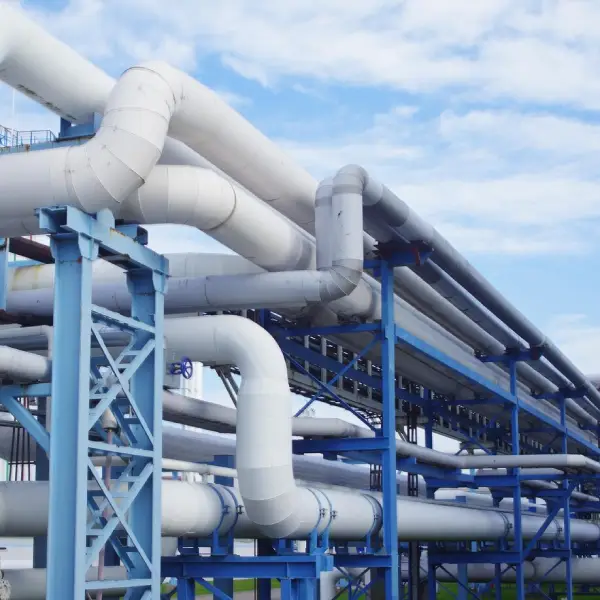
Insulation and Cladding for the UAE Oil & Gas Industry: Pipelines, Refineries, Platforms and LNG Terminals
What does oil and gas insulation and cladding involve?
Oil and gas insulation and cladding is the application of thermal insulation — mineral wool, calcium silicate, PUF, or PIR — to process piping, vessels, and equipment, protected by an outer aluminium or stainless steel cladding layer. It manages process temperatures from cryogenic LNG through to high-temperature hot oil lines, protects personnel from burn hazards, and prevents corrosion under insulation (CUI) on pipelines, refineries, storage terminals, and offshore platforms.
Introduction: A Sector Where Insulation Failure Isn't an Option
In most industries, poor insulation means higher energy bills. In oil and gas, it can mean corrosion failures, safety incidents, or process downtime that costs far more than the insulation package itself. Novoclad Insulation Contracting LLC works across the UAE's onshore and offshore oil and gas sector as an ADNOC Approved Vendor and CICPA Approved Contractor, delivering insulation and cladding built to the reliability standards this industry demands.
Where Insulation Is Applied Across the Oil & Gas Value Chain
Oil and gas insulation scope spans the full value chain — upstream, midstream, and downstream. Onshore and offshore pipelines carry crude, gas, and refined products at temperatures ranging from cryogenic to several hundred degrees. Refineries and process plants run hot oil lines, distillation columns, and reactor vessels around the clock. LNG and LPG storage terminals hold product at ultra-low temperatures. Offshore platforms combine all of the above in a marine environment where corrosion pressure is constant.
Corrosion Under Insulation (CUI): The Industry's Quiet Risk
Corrosion under insulation is one of the most costly and hardest-to-detect failure modes in oil and gas facilities. It happens when moisture works its way between the insulation and the pipe or vessel wall — through poorly lapped cladding, damaged seals, or condensation — and corrodes the metal from the outside in, hidden from view until a leak or failure occurs. Preventing it comes down to installation discipline:
- Correct vapour barrier detailing on cold and cryogenic lines to stop moisture ingress at the source.
- Properly lapped and sealed cladding with weatherproof jointing, particularly at flanges, valves, and pipe supports.
- Drainage design at low points so any moisture that does enter can escape rather than pool against the pipe.
- Low-chloride insulation materials specified around stainless steel to avoid stress corrosion cracking.
CUI prevention isn't a specification line item — it's a function of installation quality, which is why contractor experience matters as much as material choice.
Materials Used in UAE Oil & Gas Insulation
- Mineral wool / rockwool: The workhorse for hot piping and equipment, offering thermal performance plus fire resistance.
- Calcium silicate: Used on high-temperature process lines where dimensional stability under heat is critical.
- Closed-cell PUF and PIR: Applied on cold, chilled, and cryogenic systems including LNG and LPG lines, always paired with a vapour barrier.
- Aluminium and stainless steel cladding: The outer protective jacket, selected for corrosion resistance, mechanical durability, and — offshore — resistance to salt-laden marine air.
Personnel Protection & Fireproofing
Hot process equipment in refineries and plants presents a genuine burn hazard to personnel working nearby. Personnel protection insulation is specified on exposed hot surfaces to bring touch temperatures down to safe levels. On critical structural steel and vessels, fireproofing — cementitious or intumescent — is applied to maintain structural integrity during a fire event, buying time for evacuation and emergency response.
Onshore vs. Offshore: Different Environments, Same Standards
Onshore facilities in industrial zones like Ruwais and Jebel Ali face desert heat, sandstorms, and UV exposure. Offshore platforms add constant salt spray, vibration, and space constraints to the mix. Both require the same underlying discipline — correct material selection, careful CUI prevention, and cladding detailing built for the environment — but offshore work also demands marine-grade fixings and access planning around live production. Novoclad's onshore and offshore insulation teams are equipped for both.
Why Choose Novoclad for Oil & Gas Insulation
- 1- ADNOC Approved Vendor & CICPA Approved Contractor: Direct access to work on ADNOC group and CICPA-regulated facilities.
- 2- ISO 9001, ISO 45001, ISO 14001, and ICV certified: Quality, safety, environmental, and local-value standards built into every project.
- 3- Full-scope capability: Hot, cold, cryogenic, and personnel protection insulation plus fireproofing and cladding under one contractor.
Conclusion
Insulation and cladding failures in oil and gas facilities carry consequences well beyond energy loss — safety incidents, corrosion damage, and unplanned downtime are all on the line. Novoclad Insulation Contracting LLC delivers ADNOC-approved, CICPA-approved insulation and cladding for onshore pipelines, refineries, offshore platforms, and LNG terminals across the UAE. Contact our team to discuss your next oil and gas project.
Frequently Asked Questions
Your Questions, Answered
Novoclad provides hot insulation for process piping and equipment, cold and cryogenic insulation for LNG and refrigerated systems, personnel protection insulation for burn-hazard prevention, fireproofing, and aluminium or stainless steel cladding, delivered for onshore pipelines, refineries, process plants, storage terminals, and offshore platforms across the UAE.
Yes. Novoclad Insulation Contracting LLC is an ADNOC Approved Vendor and a CICPA Approved Contractor, allowing it to work directly on ADNOC group facilities and CICPA-regulated critical infrastructure sites across Abu Dhabi's oil and gas sector.
Corrosion under insulation (CUI) occurs when moisture becomes trapped between insulation and metal piping or vessels, causing hidden corrosion that can lead to leaks or failure. It is prevented through correct vapour barrier detailing, properly lapped and sealed cladding, drainage design at low points, and the use of insulation materials with low chloride content near stainless steel.
Common materials include mineral wool and rockwool for hot piping and equipment, calcium silicate for high-temperature process lines, closed-cell PUF and PIR for cold and cryogenic systems, with aluminium or stainless steel cladding as the outer weatherproof and mechanical protection layer.
Yes. Novoclad delivers insulation and cladding for onshore pipelines, refineries, and process plants as well as offshore platforms and marine vessels, applying the same ISO-certified quality and safety management system across both environments.