
Articles & blog
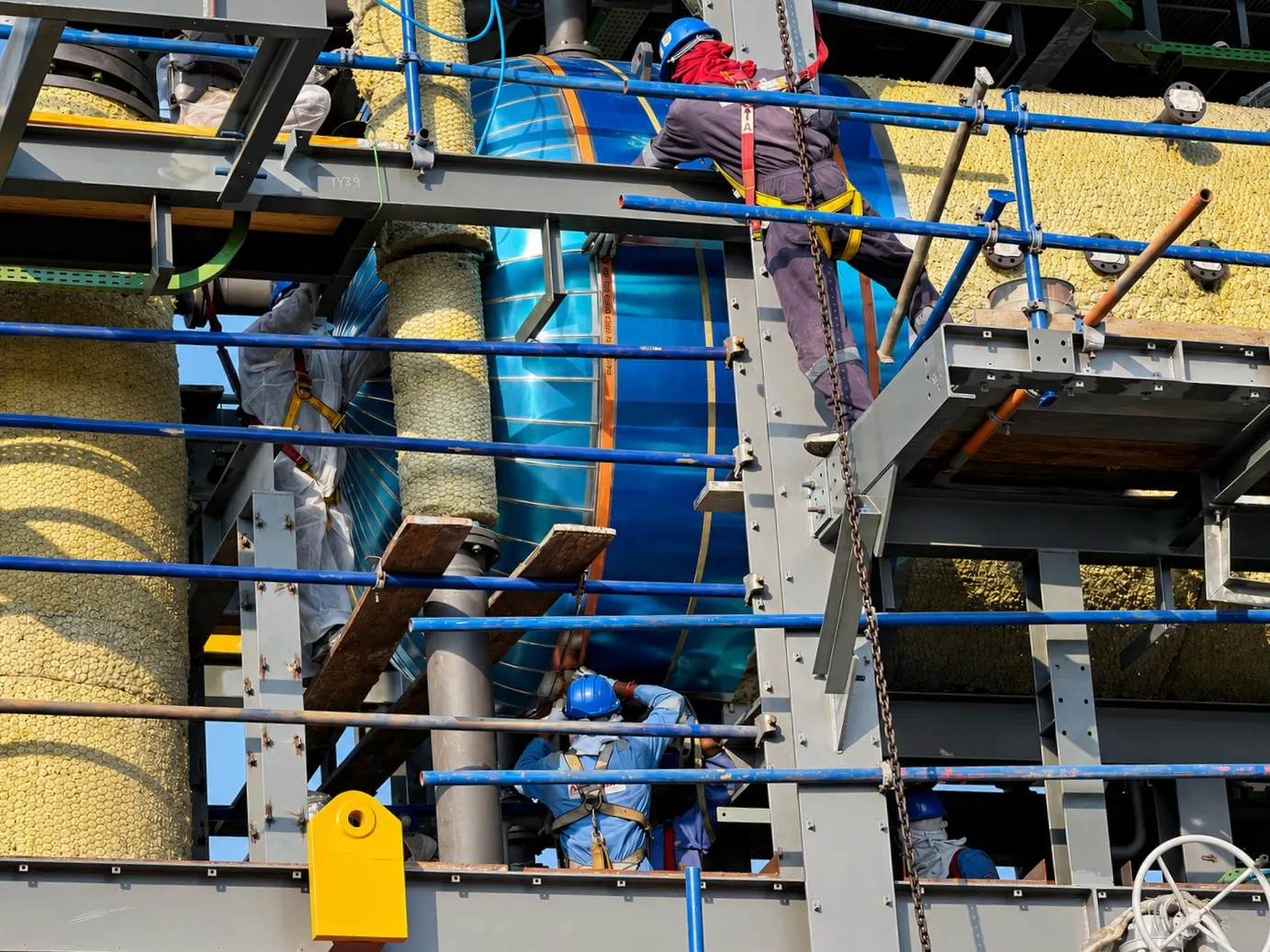
How to Choose an Insulation Contractor in the UAE
A practical checklist covering certifications, sector experience, and the questions worth asking before you sign a contract.
By Novoclad Team • • 6 min read
Key takeaways
- Certifications matter more than price — ISO 9001/45001/14001 as a baseline, CICPA approval and ADNOC registration if the project touches critical infrastructure.
- Specialists outperform generalists on technical scopes like cryogenic, hot, and cold insulation.
- Multi-location coverage reduces mobilisation delays on time-sensitive shutdown work.
- Ask for documentation — method statements, material traceability, and inspection records — before award, not after.
Why the Right Contractor Choice Matters
Insulation failures rarely show up on day one. A poorly detailed vapour barrier, an undersized cladding profile, or the wrong material for a cryogenic line can take months to reveal itself — usually as corrosion under insulation, condensation damage, or an unplanned shutdown. In the UAE's climate and industrial environment, choosing an insulation contractor isn't just a procurement decision; it's a technical one with long-term cost consequences.
This guide walks through what actually separates a reliable insulation and cladding contractor from one that will cost you more in rework than they saved you on the original quote.
1. Check Certifications First, Not Last
Before comparing quotes, confirm the contractor holds the certifications relevant to your project type:
-
✓
ISO 9001:2015 (Quality Management)
Confirms documented, auditable quality processes — not just verbal assurances. -
✓
ISO 45001:2018 (Occupational Safety)
Especially important for site-based industrial and oil & gas work. -
✓
ISO 14001:2015 (Environmental Management)
Increasingly required in free zone and municipality tendering. -
✓
CICPA approval and ADNOC registration
Mandatory if the project touches ADNOC facilities or other Abu Dhabi critical infrastructure zones — a contractor without this cannot legally mobilise on site, regardless of technical capability.
2. Specialist vs. Generalist Contractors
Generalist contractor
Often subcontracts insulation and cladding scopes to a third party, adding a coordination layer and margin. Limited in-house technical depth on material selection for hot, cold, or cryogenic service.
Specialist contractor
Handles material selection, fabrication, and installation in-house. Understands the technical differences between hot insulation, cold insulation, cryogenic systems, and acoustic requirements without needing a subcontractor to explain them.
For residential or light commercial work, a generalist may be sufficient. For industrial, marine, oil & gas, or any project involving process piping, tanks, or vessels, a dedicated insulation and cladding specialist reduces both technical risk and the number of parties responsible if something goes wrong.
3. Confirm the Full Scope They Actually Cover
Insulation is not one service — it's several distinct disciplines. A contractor should be able to clearly explain their capability across:
4. Ask About Location Coverage and Mobilisation Speed
On shutdown or turnaround work, every day of delayed mobilisation has a direct cost. A contractor with a single office may struggle to deploy teams quickly across Dubai, Sharjah, and Abu Dhabi simultaneously. Ask specifically:
- How many physical offices do you have in the UAE, and where?
- What is your typical mobilisation time from contract award to site start?
- Do you maintain dedicated site supervision staff in each emirate you serve, or fly teams in from a single base?
"The contractor that wins on price but takes three extra weeks to mobilise usually ends up being the more expensive option once schedule impact is factored in."
5. Request Documentation Before You Award, Not After
A contractor confident in their work will readily provide, before contract signature:
-
✓
A written method statement
Specific to your project scope, not a generic template. -
✓
Material traceability commitments
Confirmation of where insulation and cladding materials are sourced and certified. -
✓
An inspection and QA/QC plan
Defined checkpoints during installation, not just a final walkthrough.
Related Services & Resources
Frequently Asked Questions
Checking These Boxes Already? Let's Talk.
Novoclad is CICPA-approved, ADNOC-registered, ISO 9001/45001/14001 certified, with offices in Dubai, Sharjah, and Abu Dhabi.