
Articles & blog
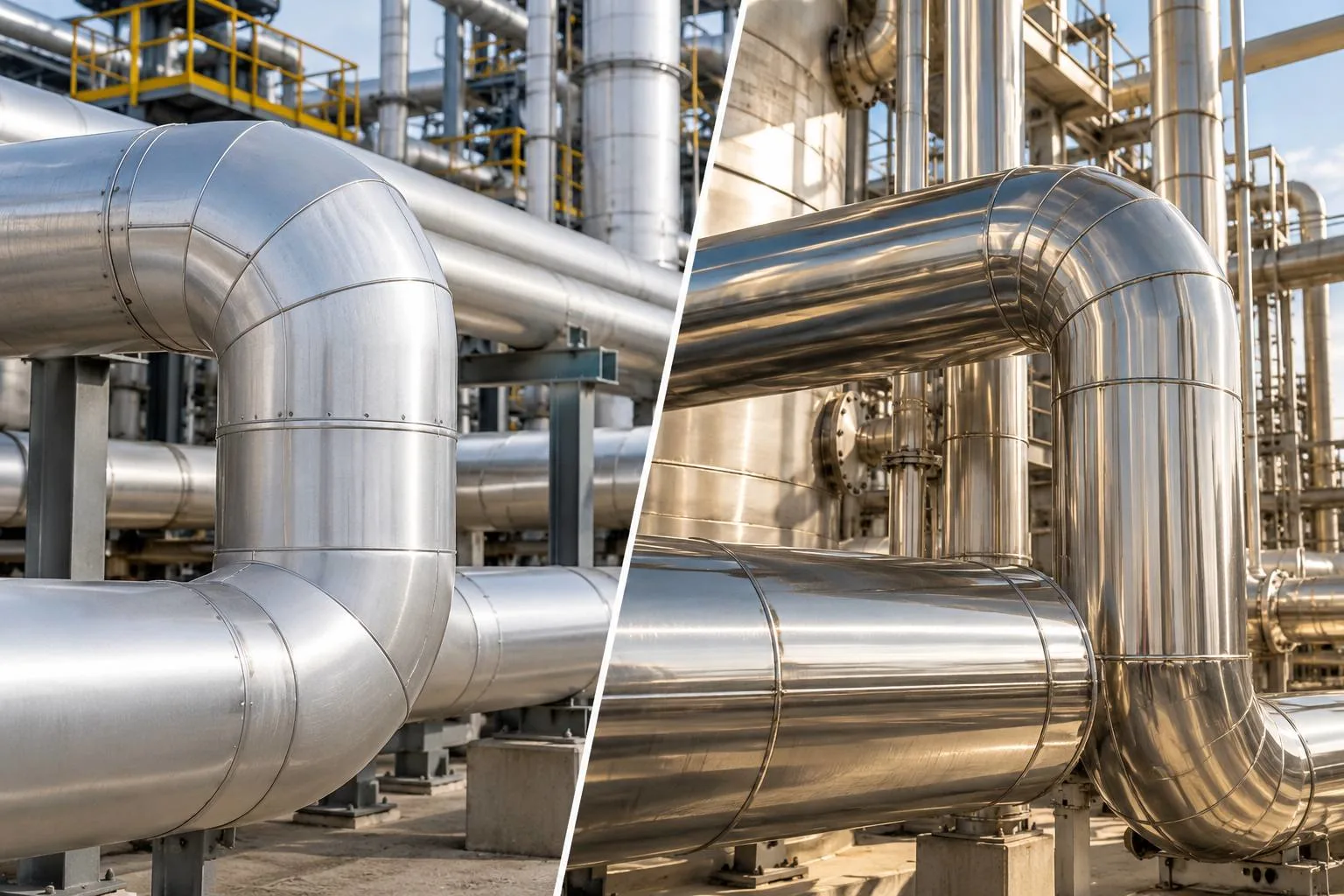
Aluminium vs Stainless Steel Cladding in the UAE: Which Is Right for Your Insulation System?
What is insulation cladding?
Insulation cladding, also called jacketing, is a thin metal outer layer fitted over thermal insulation on pipes, vessels, tanks and ductwork. In the UAE it is most often aluminium, stainless steel or galvanised steel, chosen to keep out rain, humidity, sand and mechanical damage so the insulation keeps performing and the metal beneath does not corrode.
Introduction: The Layer People See, and the One That Decides How Long Insulation Lasts
Insulation does the thermal work, but cladding decides whether it survives. In the UAE, salt-laden air, summer heat, sandstorms and foot traffic all attack the outer jacket first. Pick the wrong metal and the insulation soaks up moisture, loses performance and starts corroding the pipe underneath. At Novoclad Insulation Contracting LLC, the aluminium-or-stainless question comes up on almost every project.
Aluminium Cladding: The UAE Default for Good Reason
Aluminium is the most widely used cladding on UAE pipework and equipment. It is light, so supports and framing stay simple. It rolls and forms easily on site, and it forms its own protective oxide film, which gives solid resistance to coastal humidity. For general industrial, commercial and HVAC work it is usually the best value choice.
-
✓
Lightweight and quick to install
Lower labour and structural load, especially on long pipe runs and elevated pipe racks. -
✓
Good corrosion resistance
The natural oxide layer handles humidity and most coastal exposure without extra coating. -
✓
Lower supply cost
Usually the most economical option for large areas of cladding.
Stainless Steel Cladding: Built for Harsh and High-Risk Service
Stainless steel costs more, but it earns its place where conditions are severe. It resists impact and foot traffic far better than aluminium, tolerates aggressive salt and chemical environments, and keeps its strength at temperatures where aluminium has already failed. That fire performance is why many oil and gas, marine and offshore specifications call for it.
Choose Aluminium When
The service is general industrial, commercial or HVAC, weight and budget matter, and there is no fire-risk requirement or heavy mechanical abuse. It is the practical default for most pipework and ductwork.
Choose Stainless Steel When
The site is offshore, near hydrocarbons or open flame risk, exposed to heavy traffic or chemical splash, or the client specification requires fire-resistant jacketing.
What About Galvanised Steel?
Galvanised steel sits between the two on cost and toughness. It suits protected or indoor areas such as plant rooms and ductwork where moisture is limited, but it is less suited to direct coastal or offshore exposure, where its zinc coating wears faster than aluminium or stainless steel.
Installation Quality Matters as Much as the Metal
Even the best cladding fails if it is badly fitted. Overlaps must shed water, joints need sealing, and fixings should suit the metal to avoid galvanic corrosion between dissimilar materials. On cold and cryogenic lines, a continuous vapour barrier beneath the cladding is just as important. Poor detailing is the main route for moisture to reach the pipe and cause corrosion under insulation.
"Cladding is not a finish. It is the weather barrier that protects both the insulation and the pipe, so the metal and the detailing should be chosen for the service, not just the price."
Why Choose Novoclad for Insulation Cladding
-
✓
All three materials supplied and installed
Aluminium, stainless steel and galvanised steel, matched to the service rather than a one-size-fits-all default. -
✓
Fabrication and installation in-house
One contractor handles supply, fabrication and fitting, so detailing and quality stay consistent. -
✓
ADNOC Approved Vendor & CICPA Approved Contractor
Proven on oil and gas, marine and critical infrastructure sites across the UAE.
Related Services & Resources
Aluminium and stainless steel cladding each have a clear place in UAE insulation systems. The right answer comes from the site conditions, the fire and mechanical risk, and the client specification, not habit. Novoclad Insulation Contracting LLC supplies and installs both across Dubai, Abu Dhabi and Sharjah.
Not Sure Which Cladding Your Project Needs?
Tell us the site conditions and specification, and we will recommend the right cladding system.
Frequently Asked Questions
Your Questions, Answered
Insulation cladding, also called jacketing, is a thin metal outer layer fitted over thermal insulation on pipes, vessels, tanks and ductwork. It keeps out rain, humidity, sand and mechanical damage so the insulation underneath keeps performing and the metal beneath does not corrode.
Both resist corrosion well, and the right choice depends on the service. Aluminium suits most coastal and general industrial pipework because it is light, easy to fabricate and cost effective. Stainless steel is preferred where there is higher mechanical abuse, fire exposure, or aggressive salt and chemical conditions, such as offshore platforms and process areas.
Aluminium melts at around 660°C, while stainless steel keeps its strength at far higher temperatures. In areas with a fire risk, such as hydrocarbon process units, stainless steel cladding holds the insulation in place longer, which is why many oil and gas specifications require it.
Aluminium is usually the lower-cost option for supply and installation because it is lighter and quicker to form. Stainless steel costs more upfront but can lower lifetime cost in severe service because it needs less repair and replacement.
Yes. Novoclad Insulation Contracting LLC supplies, fabricates and installs aluminium, stainless steel and galvanised steel cladding as part of its insulation scopes across Dubai, Abu Dhabi and Sharjah, for industrial, marine, offshore and commercial projects.